


Theddlethorpe History Club
Stain Hill
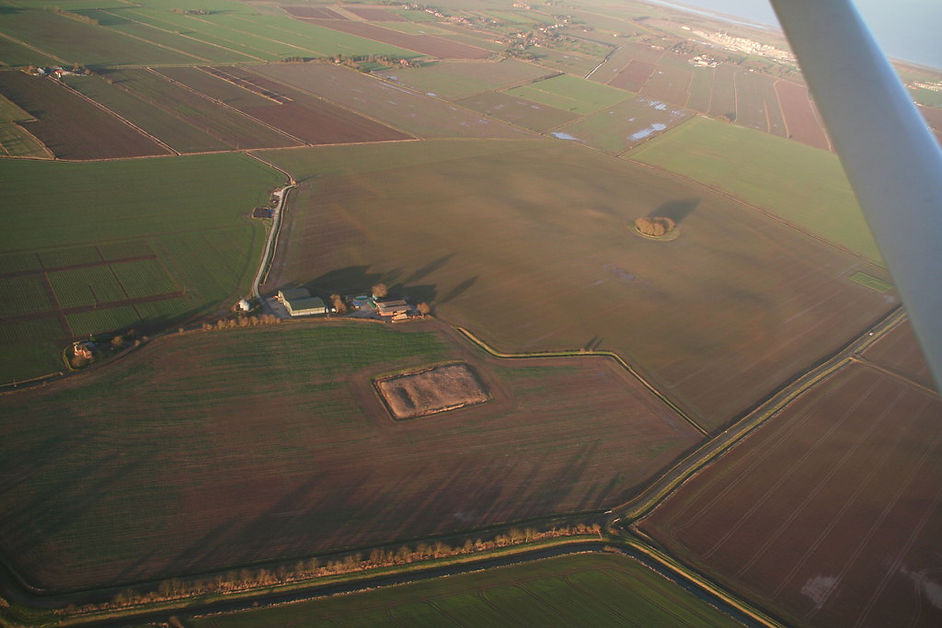
Stain Hill and deserted village of Stain: aerial 2015
See also: TF4684 : Deserted village of Stain: aerial 2015 and TF4684 : Moated manor site, deserted village of Stain: aerial 2015.
In a flat landscape every bump has a name! This one, marked by the clump of trees on the right, rises to a princely 9m above sea level, or 7m above the surrounding land - see TF4784 : Stain Hill.
The hill is the site of the Church of St. John the Baptist, which belonged to the long deserted village of Stain, built on an island of glacial till clay. The moated manor site is still visible: see TF4684 : Site of deserted village of Stain: moat in the middle of a field by Stain Hill Farm.
For aerial films of this area see: Link and Link
These are LiDAR films of the Wolds and Marshes east of Louth. The films are narrated by Jim Broadbent. The land is colour-coded according to its elevation. The films show how the landscape was reclaimed for salt making and grazing. Footage includes ancient river systems, settlements, salterns and ridge and furrow. Produced for the Lincolnshire Coastal Grazing Marshes Project, which has now terminated.
The village of Stain and its church are discussed and shown in the Northern of the two films.
© Copyright Chris
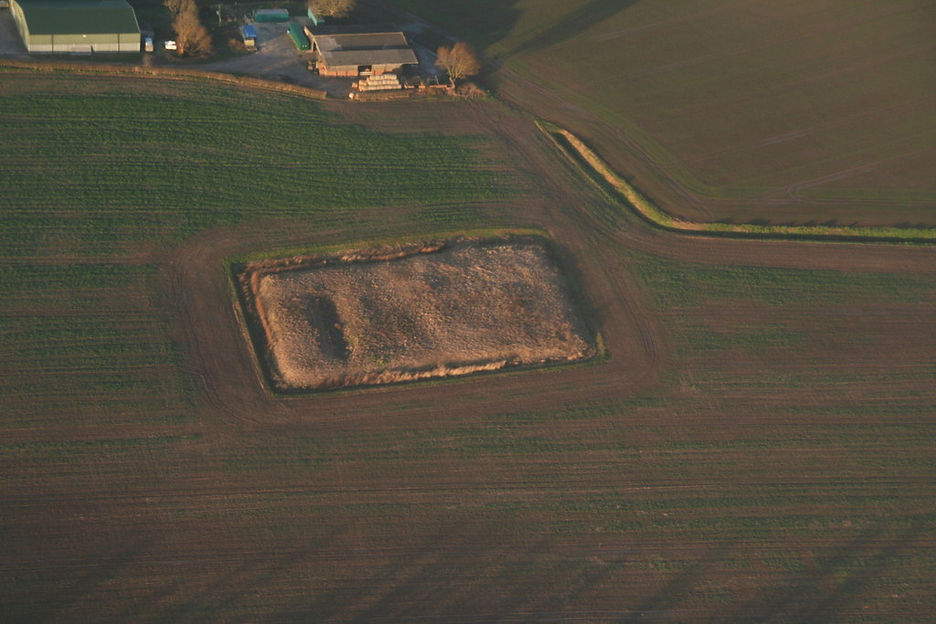

In a flat landscape every bump has a name! This one rises to a princely 9m above sea level, or 7m above the surrounding land. The hill is the site of the Church of St. John the Baptist, which belonged to the long deserted village of Stain, built on an island of glacial till clay - see Link. The moated manor site is still visible: see TF4684 : Site of deserted village of Stain: moat in the middle of a field by Stain Hill Farm.
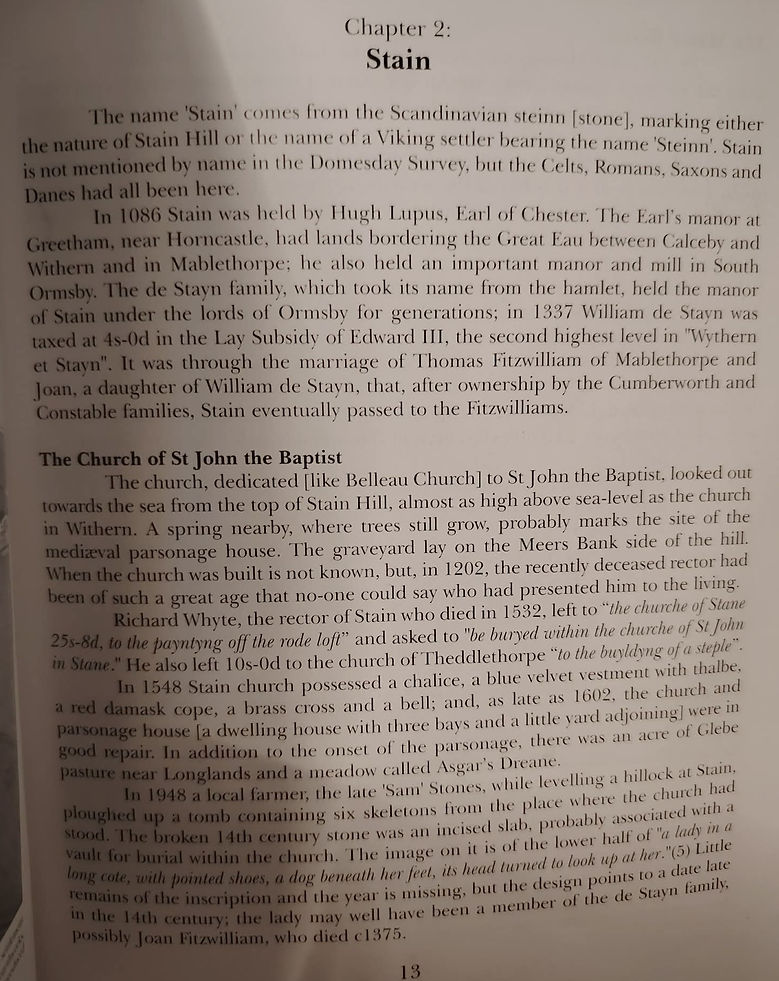
Further information from the website of Dr Caitlin Green: www.caitlingreen.org/2014/11/stain-hill-anglo-saxon-marsh.html

Nottingham Journal 20th December 1948

1948 photo of plougman Mr Cartwright and farmer Mr Stones with the 14h Century headstone they dug up at the site of the old St John the Baptist Church, Stain.
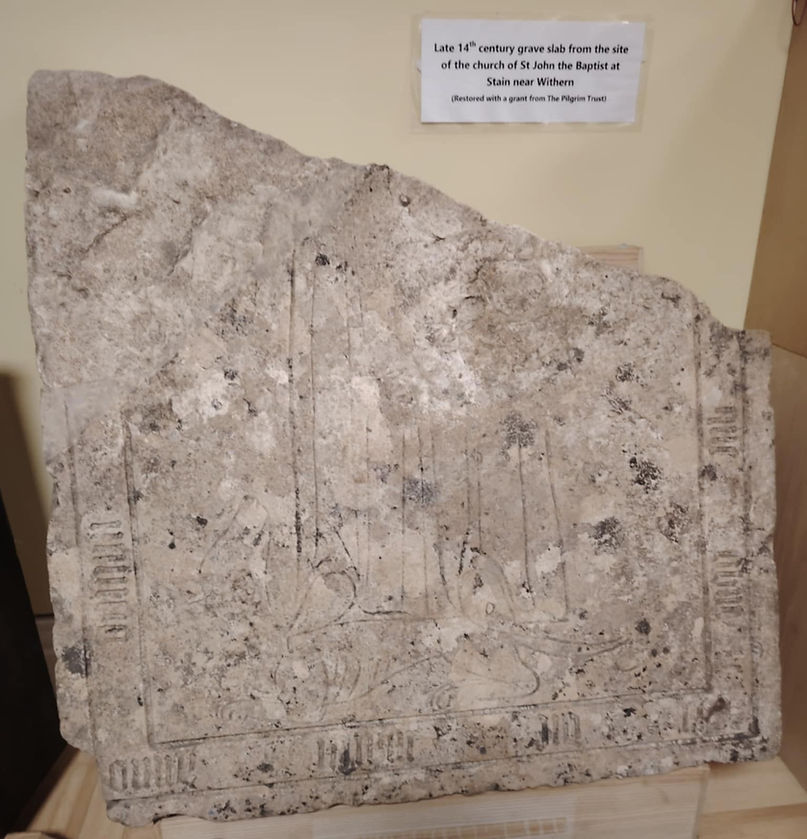
The Stain headstone now on display in Louth Museum. The image is believed to depict a lady in a long dress and pointed shoes, with a dog lying at her feet.

Sword found at Stain Hill

Skegness News 16th November 1910


White's History, Gazetteer and Directory of Lincolnshire 1872

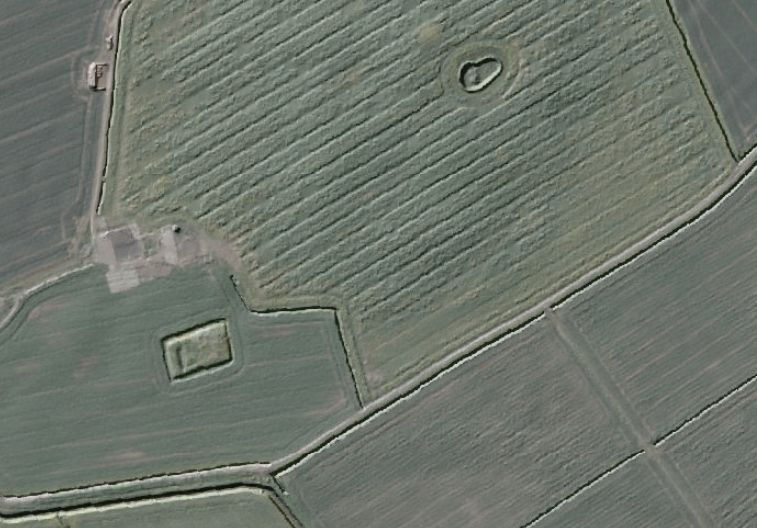
Lidar image of Stain Hill: the rectangular moated manor site at the bottom left, and site of the old St John the Baptist Church in the field above, location of the former hamlet of Stayn.
Timeline and Family Trees of the Lords of Stain Manor, up to the early 17th Century, when the once large and important estate was broken up.
Over the years Stain has been held by some very influential people, including many knights, some MPs, Sheriff and Justices of Lincolnshire. Passing from the de Stayne family to their relatives the Cumberworths, and Constables, to a branch of the Fitzwilliams of Mablethorpe that were descended from Joan de Stayne. The Skipwith family of Ormsby were related and held wardship and trusteeship of the manor at times. The financial difficulties of the Fitzwilliam family led to the breaking up of the estate and the abandonment of the manor and the Church of St John the Baptist.

